Hi quest ,  welcome  |  sign in  |  registered now  |  need help ?

IMF's Lagarde confident on 'action-oriented' G-20 plan

Written By Savoeun on Monday, 24 February 2014 | 20:01

An "action-oriented" plan by the G-20 to add an extra two percentage points to global growth over five years has a good chance of succeeding, International Monetary Fund chief Christine Lagarde said on Sunday.
Speaking at a meeting of the Group of 20 world economies in Sydney, Lagarde also praised Australia's presidency of the gathering.
The G-20 said in a communiqué on Sunday that they would develop policies to lift their collective gross domestic product by an additional 2 percent over the coming five years, generating over $2 trillion in additional output and creating tens of millions of new jobs.
"We believe that if the reforms that have been identified are adhered to and delivered by the various authorities then that is a goal that can be achieved and possibly exceeded," Lagarde told reporters on Sunday.
CNBC
CNBC's Oriel Morrison interviews IMF chief Christine Lagarde
The G-20– which collectively represent 85 percent of the global economy –have until November when the next G-20 summit takes place in Brisbane, Australia, to finalize their own strategies to implement the structural reforms necessary to up growth by 0.5 percent per year, Reuters reported.
"The beauty of the plan is that it's going to rely essentially on domestic measures that will be beneficial for domestic markets," Lagarde told CNBC on the sidelines of the G-20 meeting. "It's not some 'far-fetched plan out in the clouds," she added.
The IMF forecasts 3.7 percent global growth in 2014 and 4 percent in 2015.
Play Video
Speaking about the fallout of an unwinding of U.S. monetary stimulus on frail emerging markets, Lagarde said the U.S. Federal Reserve did have an open mind about the implications of its actions for the developing world.
"Clearly during the discussions yesterday and today, there was an open mind on the part of the chairman of the Fed to understand the issues and listen to the concerns and what you call the angst of the emerging market economies," she told CNBC.
Lagarde added that it was important to remember that emerging market economies were subject to their own nuances and should not be bundled together.
"You can't just put all emerging market economies into one bucket… and assume that they are all the same. They are all very different. Some of them have taken policy measures in order to resist potential volatility and that has proven efficient," she said.
20:01 | 0 comments

Samsung Unveils Galaxy S5 Reading Fingerprints to Fight IPhone

Samsung Electronics Co. unveiled a Galaxy S5 smartphone with a fingerprint reader and bigger screen than the current model as Asia’s biggest technology company tries to keep high-end consumers from Apple Inc.’s iPhones.
The water-resistant phone will go on sale April 11 with features including a longer-lasting battery than the S4, according to Min Cho, marketing director at Samsung’s mobile unit. The device, shown at the Mobile World Congress in Barcelona, uses Google Inc.’s Android software and has a download booster for fourth-generation networks and Wi-Fi.
Demand for high-end Galaxy devices was curbed by the release of new iPhones in September, squeezing sales in the most profitable segment of the market and contributing to Samsung’s slowest earnings growth since 2011. The company announced its first wearable devices using Tizen software and plans more smartphones this year to fend off Apple and Chinese producers packing advanced features into inexpensive models.
The back of the Galaxy S5 has a leather feel, and the device will ship in black, white, blue or gold, the Suwon, South Korea-based company said. The smartphone is designed to withstand 30 minutes at the bottom of a meter-deep (3-foot) pond, Samsung said.
Photographer: Angel Navarette/Bloomberg
The reverse side of a gold colored Galaxy S5 smartphone is seen during a Samsung... Read More
The main camera will have a resolution of 16 megapixels, compared with 13 megapixels on the S4 model, and the battery will last 20 percent longer than its predecessor, Samsung said.

Share Slump

The 5.1-inch display is full high definition on an active-matrix organic light-emitting diode, or AMOLED, screen.
Shares of Samsung fell 0.2 percent to 1,328,000 won yesterday in Seoul. The stock has dropped 13 percent in the past 12 months, wiping out about $28 billion of market value.
The iPhone 5s, which went on sale in markets including China, Japan and the U.S. on Sept. 20, has fingerprint-reading technology.
Samsung used a more low-key approach in unveiling the Galaxy S5, sharing the spotlight with carriers and producers including Sony Corp., Huawei Technologies Co. and HTC Corp. at Mobile World Congress. The S4 debuted at an exclusive gala at New York’s Radio City Music Hall last March, yet fell short of its predecessor’s shipments as the high-end market became more saturated.

Xiaomi, Lenovo

Samsung shipped 63.5 million units of the 5-inch S4, according to the median of three analyst estimates. The 4.8-inch S3 shipped about 65.6 million units, according to analysts.
Apple sold 51 million iPhones in the December quarter alone, and last month began selling the devices through China Mobile Ltd., the world’s largest carrier with 772 million subscribers.
Samsung is the top smartphone vendor in China with 19 percent of the market in the fourth quarter, researcher Canalys said Feb. 20. The company is seeking to use the S5 to maintain that position against domestic producers including Lenovo Group Ltd. and Xiaomi Corp., which have 12 percent and 7 percent of the market, respectively.
Samsung last month posted a 5.4 percent rise in fourth-quarter net income to 7.22 trillion won ($6.7 billion), its slowest profit growth since 2011.
18:39 | 0 comments

Buffett Warns of Liquidity Curse, Celebrates Property Bet


Warren Buffett, the billionaire chairman of Berkshire Hathaway Inc. (BRK/A), cited a farm he’s owned since 1986 to caution individuals against frequent buying and selling of stocks.
Investors should treat their equity holdings like real estate purchases, focusing on the potential for profits over time rather than short-term price fluctuations, Buffett, 83, wrote in an excerpt from his annual letter published on the website of Fortune magazine today.
“Those people who can sit quietly for decades when they own a farm or apartment house too often become frenetic when they are exposed to a stream of stock quotations,” Buffett said. “For these investors, liquidity is transformed from the unqualified benefit it should be to a curse.”
Buffett has pursued a buy-and-hold investment approach as he built Omaha, Nebraska-based Berkshire into a $280 billion company accumulating the largest holdings of Coca-Cola Co. (KO), American Express Co. and Wells Fargo & Co. He’s said individual investors may be better off avoiding his approach to picking stocks, instead purchasing a fund that holds every company in the Standard & Poor’s 500 Index.
“The goal of the nonprofessional should not be to pick winners,” Buffett wrote. “The ‘know-nothing’ investor who both diversifies and keeps his costs minimal is virtually certain to get satisfactory results.”
The S&P 500 has returned about 7 percent annually over the past decade, beating by almost a percentage point the average yearly advance of Buffett’s company. Buffett has said he aims to increase Berkshire’s book value, a measure of assets minus liabilities, more rapidly than the S&P 500.

Retail Property

Buffett’s track record of profitable stock picks and takeovers has helped make his letters a must-read on Wall Street. The billionaire has said he writes them to be understood by his sisters, who don’t work in finance. The full document will probably be released by March 1, along with financial results for 2013.
In today’s excerpt, Buffett cited the agricultural holding and a 1993 investment in New York City real estate. Annual distributions on the retail property, near New York University, now exceed 35 percent of the initial investment.
He purchased the 400-acre (1.6 square kilometer) farm, located 50 miles (80 kilometers) north of Omaha, for $280,000 in 1986. He says he calculated the farm’s return to be about 10 percent, based on production estimates for soy and corn. The farm is worth about five times what Buffett paid, and earnings have tripled, he wrote.

‘Moody Fellow’

The billionaire compared the daily fluctuations in stock values to an erratic neighbor standing near his property, yelling out offers for the land.
“If a moody fellow with a farm bordering my property yelled out a price every day to me at which he would either buy my farm or sell me his -- and those prices varied widely over short periods of time depending on his mental state -- how in the world could I be other than benefited,” Buffett wrote. “If his daily shout-out was ridiculously low, and I had some spare cash, I would buy his farm. If the number he yelled was absurdly high, I could either sell to him or just go on farming.”
That’s not how equity holders often react, Buffett said.
“Owners of stocks, however, too often let the capricious and irrational behavior of their fellow owners cause them to behave irrationally,” he wrote. “Because there is so much chatter about markets, the economy, interest rates, price behavior of stocks, etc., some investors believe it is important to listen to pundits -- and, worse yet, important to consider acting upon their comments.”

Market Fluctuations

Buffett has said that he regrets not taking advantage of such irrationality to sell holdings. Coca-Cola Co., one of Berkshire’s largest equity holdings, was one of the billionaire’s most successful investments in the 1990s, reaching prices that were more than 45 times earnings at the end of 1998.
The investment has fared worse since then. While the stock price has recovered most of its losses since falling from the 1998 peak, Coke’s price-to-earnings ratio is less than half of what it once was. Shares have declined this year as the soft-drink maker faces sluggish growth outside the U.S. and concerns about the healthiness of its product at home.
“Though I said at the time that certain of the stocks we held were priced ahead of themselves, I underestimated how severe the overvaluation was,” he wrote in a 2005 letter to shareholders, reflecting on stocks in Berkshire’s portfolio in the late 1990s. “I talked when I should have walked.”
Despite that regret, Buffett reiterated his view today that excessive trading can diminish returns.

‘Frictional Costs’

“Both individuals and institutions will constantly be urged to be active by those who profit from giving advice or effecting transactions,” he wrote. “The resulting frictional costs can be huge and, for investors in aggregate, devoid of benefit.”
Berkshire last week decided to stop letting high-speed traders purchase direct access to press releases distributed by its Business Wire unit. Such firms often enter and exit positions in less than a second. Buffett said last year that such activity is “not contributing anything to capitalism.”
18:35 | 0 comments

Standby for a dollar-yen rebound rally

As investors continue to question the long-term effectiveness of Abenomics before a sales-tax hike takes effect in April, where the yen's headed is anyone's guess. However, if chart patterns are anything to go by a further weakening of the safe-haven currency is in store.
The yen fell to its lowest level against the U.S. dollar in three weeks early last Tuesday after the Bank of Japan extended three special loan facilities by one year and boosted the maximum amount of the loans – a move the market interpreted as a "mini ease." However, the Japanese currency remains off of recent multi-year lows above 105 per dollar touched in late December.
While uncertainty over how investors may react to the April sales-tax hike could keep the yen from weakening further in the short term, charts indicate a test of 110 may be in the cards.
Chart patterns are predictable, which makes them a gem of a tool for trading. The dollar-yen weekly chart shows an upward sloping triangle. If the pattern develops and completes as expected it gives an upside target of 110. It's not the sort of move that you want to be on the wrong side of.
But step back for a moment. Predictable doesn't mean the USD/JPY will go to 110. Predictable means that when this type of pattern appears on a chart there is a high probability that the pattern will develop with an upside breakout. Here, there is a high probability – around 80 percent – that the breakout will achieve its projected upside target.
Thus, there is a low probability – around 20 percent – that the pattern will fail to develop as expected and the price will fall below the lower edge of the chart pattern. This 20 percent failure rate also includes those trades where the price breakout does not rise enough to achieve the chart pattern price projection target.
Predictability means we can establish the probabilities of particular outcomes with a high level of confidence. The chart pattern sets the potential target, and it also sets the exact price level at which we know the pattern has failed. That's the stop loss essential for all trading.
Getty Images
The triangle chart pattern has three elements.
The first is the support/resistance level. This is near 101 on the weekly dollar-yen chart.
The second is the upward sloping trend line that defines the lower edge of the chart pattern. This starts from the low of 92.6 in April 2013, and uses the lows in June 2013 and the two lows in October 2013 to set the position of the uptrend line. A fall below this line would signal the end of the pattern and the end of the uptrend that started in February 2012.
The third, and an essential element that completes the pattern, is the base line. This is created by 1 to 5 candles of price activity moving in the same direction. The dollar-yen chart uses six candles, five of which are green. This is the base of the triangle. Its height is measured, and this value is projected above the support/resistance level to give a projected upside pattern target near 110.
There is a high probability the 110 target will be achieved. Note, the dollar-yen may fall as low as 100 – the value of the uptrend line – and still remain consistent with the development of this chart pattern.
Daryl Guppy is a trader and author of Trend Trading, The 36 Strategies of the Chinese for Financial Traders – www.guppytraders.com. He is a regular guest on CNBCAsia Squawk Box. He is a speaker at trading conferences in China, Asia, Australia and Europe.
18:17 | 0 comments

Japan, U.S. fail to make headway in TPP talks

Bilateral talks between Japan and the United States held as part of negotiations on a Pacific trade pact ended without an agreement on Monday, with Japanese Economics Minister Akira Amari saying that gaps still remained between the two sides.

U.S. and Japanese differences over agricultural tariffs are one of the major hurdles facing the 12-country Trans-Pacific Partnership (TPP) and time is running out to find a way forward at the latest round of talks which wrap up in Singapore on Tuesday.
“There are still considerable gaps between the positions of Japan and the United States,” Amari told reporters.
“But discussions are deepening,” Amari said, adding that, the two sides agreed to continue efforts at the working level to try to narrow the differences.
Amari said that at this stage, no minister-level talks between the United States and Japan had been set for Tuesday.
Asked about the prospects for an in-principle agreement on the overall TPP talks, Amari said the talks had not yet reached a consensus.
He added, however, that there were some areas where there has been a convergence, adding that various bilateral negotiations had also been moving forward.
The TPP, which will cover around 40 percent of the world’s economy, aims to set common standards on a range of issues from regulation to labor and environmental protection.
But trade officials from the 12 nations involved in the talks have made it clear many of the final hurdles involve more concrete trade barriers such as tariffs on imported goods and caps on imports of sensitive goods.
Japan, which has tried to protect its rice, wheat, beef and pork, dairy and sugar from outside competition, is in particular focus as farmers in big agricultural exporting nations push for elimination of all tariffs.
Monday’s talks were the second set of bilateral talks between Japan and the United States since the four-day TPP talks began in Singapore on Saturday.
Negotiators are hoping that a draft deal can be ready by the time U.S. President Barack Obama visits the region in April.


18:11 | 0 comments

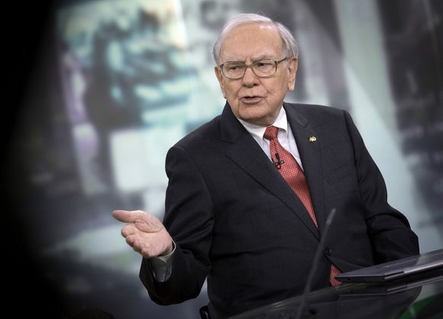
Warren Buffett's three 'fundamentals of investing'

Warren Buffett says if you want to learn how to make money from the stock market you should look at how he made some money with two small real estate investments.
In an excerpt published by Fortune, from his upcoming annual letter to Berkshire Hathaway shareholders, Buffett writes about his purchase of a Nebraska farm and his investment in a retail property near New York University in Manhattan.
In both cases, he bought when prices were unusually low after bubbles had burst.
In both cases he had no particular expertise.
And most importantly, in both cases he invested because he thought the assets would be increasingly profitable, not because he expected to sell at a higher price.
Lacy O'Toole | CNBC
Warren Buffett
"With my two small investments, I thought only of what the properties would produce and cared not at all about their daily valuations. Games are won by players who focus on the playing field—not by those whose eyes are glued to the scoreboard."
He warns against "letting the capricious and irrational behavior" of stock prices make an investor "behave irrationally as well."
In addition, Buffett argues, "Forming macro opinions or listening to the macro or market predictions of others is a waste of time."
When he bought the properties in 1986 and 1993, economic projections didn't matter to him. "I can't remember what the headlines or pundits were saying at the time. Whatever the chatter, corn would keep growing in Nebraska and students would flock to NYU."
As for not needing expertise, Buffett recommends a low-cost S&P 500 index fund for nonprofessionals, to "own a cross section of businesses that in aggregate are bound to do well." 
He also urges timid or beginning investors against going into stocks "at a time of extreme exuberance" and becoming "disillusioned when paper losses occur."
"The antidote to that kind of mistiming is for an investor to accumulate shares over a long period and never sell when the news is bad and stocks are well off their highs."
His bottom line fundamental advice: "Ignore the chatter, keep your costs minimal, and invest in stocks as you would in a farm."

18:06 | 0 comments

The most important indicator in the world right now: The yen

When traders want to know which way stocks are headed, they look to theJapanese yen.
Top strategists on Wall Street say the yen is set to weaken a lot further this year, and that should be a bullish sign for stocks, even with the S&P at record heights.
The dollar currently is trading at 102 versus the yen. Jens Nordvig of Nomura expects the rate to climb to 110 versus the yen in the second quarter and to 114 by year-end.
Yuriko Nakao | Bloomberg | Getty Images
A dealer at a foreign exchange brokerage in Tokyo.
Alan Ruskin at Deutsche Bank forecasts 115 by the end of 2014. Steven Englander of Citigroup predicts 107 but said, "I think the risk is very heavily concentrated to the upside"—meaning a weak yen is set to weaken further.
The relationship is very much intact: When the yen weakens, the U.S. stock market tends to rise, and when it strengthens, equities fall. Why?
The yen has always been a key sentiment barometer, a read on the mood of global markets because of the carry trade: when traders use yen to fund cheaply (because of its low rates) and buy riskier, higher-yielding currencies such as the Australian dollar. When Aussie-Yen gets bought (Aussie strengthening against the yen), the movement in risk assets—including global equities—follows.
What's new is that Abenomics has supercharged the traditional carry trade. Part of Prime Minister Shinzo Abe's plan is to inflate the economy and assets by massive quantitative easing, or bond-buying. The central bank is buying $78 billion a month and doubling the monetary base—more powerful QE than the Fed's because Japan's economy is smaller.
And what's even newer is the Fed's tapering, or scaling back, its QE, making Japan the center of the liquidity action. And the dollar-yen more of a carry candidate (Fed pulls back as BOJ ramps up).
US exit from QE good for weaker yen: Pro
Discussing the decline in Japan's Nikkei and attractive Japanese sectors with David Snoddy of Nezu Asia Capital Management.
Investors are using the yen to borrow cheaply in yen, sell it and buy the dollar, to purchase riskier assets such as U.S. stocks. The U.S. is considered a top destination for risky trades right now, with the nation in recovery mode, corporate earnings generally beating on the bottom line, and calmer politics and more stable economic conditions.
So the carry trade, which the Bank of Japan is supporting heartily, is helping money find its way to U.S. stocks.
What's more, when macro themes are driving markets—fading risk of a meltdown in emerging markets, better Chinese data, Europe in recovery—correlations tend to increase.
There's another factor.
A weak yen props up the Nikkei, and U.S. stocks have been closely tracking Japanese stocks lately.
It is also a blessing for Japan's exporters, because it makes their televisions and cars and electronics more competitive globally. That move has been fueling the Nikkei, helping it surge 57 percent last year.
This is a year of transition. The major central banks have been flooding the market with liquidity and crushed volatility since the crisis. Now that we're moving away from unconventional policy, the volatility could pick up.
—By CNBC's Sara Eisen
17:36 | 0 comments

Blog Archives

Welcome To Forex Trading

CONTACT US

Want to Open Account or Want to learn How to Trade Contact our Support Team:

Contact Numbers:

092 39 36 38
069 57 24 30
012 71 10 11 ,
096 400 4056

Email:

yinsavoeun@gmail.com
yinsavoeun@yahoo.com

chamnanom@gmail.com

Don't be hesitate to contact us, We are waiting to help you !

Warren Buffet

Warren Buffet

Bill Gates

Bill Gates

Chinese Vission

Chinese Vission